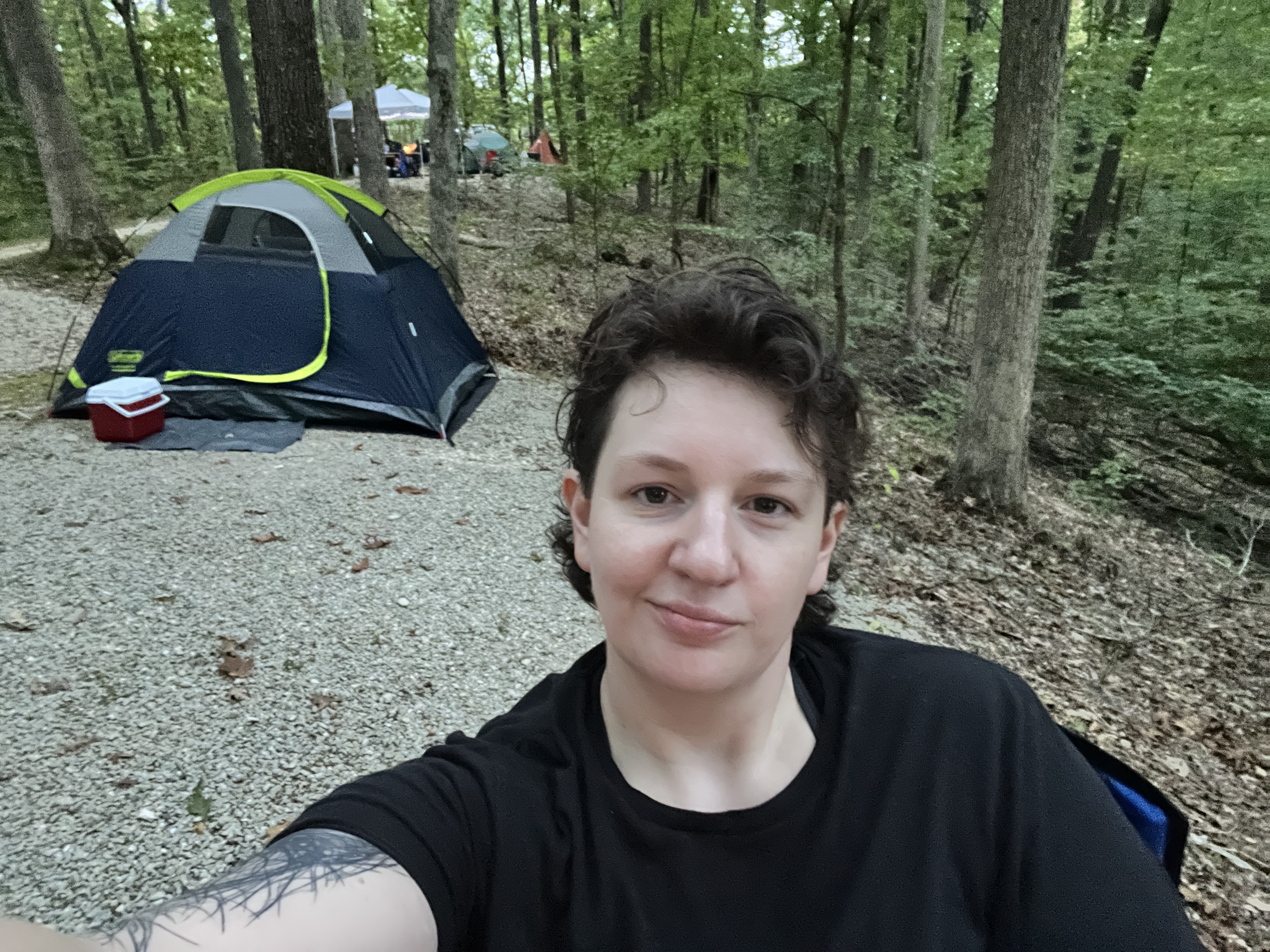
Hi, I’m Traci Johnson — a machine learning engineer and data scientist. I’m also a CrossFit enthusiast, and I’m excited to share my skills with the CrossFit community.
Accolades
- Ph.D. in Astrophysics, University of Michigan (Ann Arbor, MI), 2018
- B.A. in Physics, Carleton College (Northfield, MN), 2012
- CrossFit Level 1 Certificate, June 2024 (valid for 5 years)
- Power Monkey Camp — Certificate of Completion (Camp 24, Fall 2025)
CrossFit Questions & Answers
How long have you been doing CrossFit?
I tried it for a couple of weeks in 2017, but I’ve been training consistently using CrossFit-style programming since November 2021.
Where do you work out?
I’ve bounced between gyms over the last few years, but I’m currently at Feast Fitness & Nutrition in Ravenswood (Chicago, IL). It’s spacious, clean, LGBTQ+ friendly, and the playlist is pretty solid. It checks all my boxes.
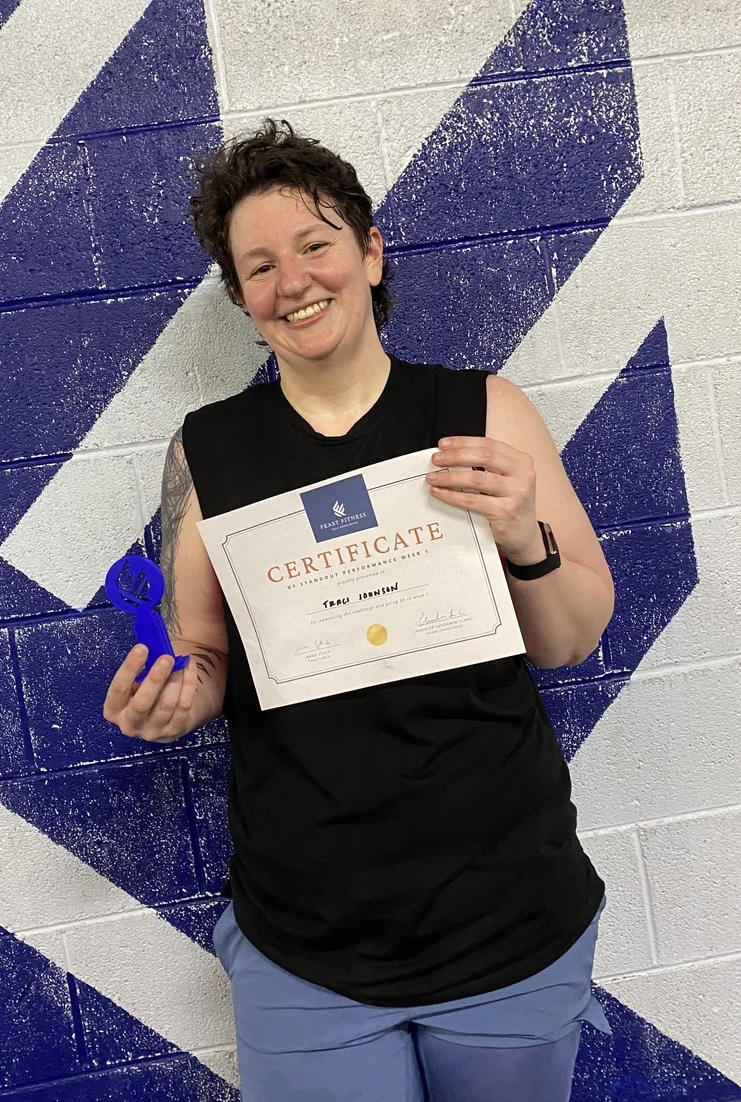
Image credit: Feast Spring 2026 Newsletter.
How do you like to train? What programming do you follow?
Up until about six months ago, I mostly did whatever was programmed for the CrossFit classes. Then I realized I train best on my own—at my own pace, with the flexibility to take physical and mental breaks when I need them. A structured class schedule just isn’t the best fit for me.
I wanted programming with plenty of supplemental guidance so I could effectively coach myself. I landed on CrossFit Linchpin, which echoes the earlier days of CrossFit (long before I joined), when there was one workout of the day and maybe some accessory work. The program is written by Pat Sherwood, a former member of the CrossFit HQ Training Staff, and his philosophy really resonates with me.
Pat believes deeply in the CrossFit methodology, but he’s also willing to make data-driven adjustments to improve outcomes for his athletes. For example, he emphasizes “intensity modulation.” Greg Glassman defined CrossFit as “constantly varied, functional movements performed at high intensity,” but based on Pat’s experience, he recommends going at your very highest intensity only two to three times per week (out of five training days).
That mindset was a game changer for me. I used to skip workouts because I was afraid to go hard when I wasn’t feeling it. Now I still show up -- I just scale more than I normally would. Pat even notes that some workouts are designed to be done for time...or not. It can still be beneficial to do a long chipper at a conversational pace and skip starting the clock, then save that energy for a day later in the week when you can really push it. As Pat says: "fitness achieved."
I know there are other similar programs out there, but I chose Pat as a programmer/coach because he embodies the “principles before personalities” vibe. He puts out a lot of content (podcasts, AMAs, member interviews), and it’s all substance -- not influencer flash. He’s not doing it for views; he genuinely cares about helping everyday people build health, fitness, and longevity.
How about nutrition and recovery?
I work with a nutrition coach: M2 Performance Nutrition. I wanted help losing weight in a sustainable way without sacrificing muscle, and I especially needed support personalizing my macronutrient targets. I’ve experimented with vegetarianism, but at the moment I’m an omnivore and try to source animal products as ethically as I can. I roughly follow a macro-based meal plan and use MyFitnessPal to track.
For recovery, I have a portable sauna -- probably the most expensive piece of health equipment I own. I’m also a bit of a night owl, but I’ve been working on more consistent, higher-quality sleep. That’s about it.
What are your most/least favorite CrossFit movements?
I love barbells -- both powerlifting and Olympic weightlifting. I hate cardio, but for some reason I’m pretty decent on machines, rowing in particular. Funny story: I tried a three-week “Learn to Row” course through the Chicago Rowing Union. It was super gay...literally -- they’re one of only two predominantly LGBTQ+ rowing crews in the U.S. I would’ve stuck around because the people were awesome, but team sports aren’t my thing. I loved being on the water, but being locked into cardio at the same pace as seven other people in a boat I can't escape from was torture.
I’m also kind of a dark horse when it comes to dumbbell snatches and kettlebell movements. I do this funny little hip-twist thing, probably from my golf days, that gives me some extra power.
I struggle with anything gymnastic or bodyweight-based. I hate wall balls. I can’t do double-unders. Like I said, I’m not a natural athlete. I have really rough coordination. I’m starting to get over my fear of box jumps again after I took a chunk out of my shin on a missed jump a few years ago.
Do you have some fitness goals?
I sure do! I’ve been working really hard to get to a healthy weight, and I’m making slow and steady progress through training and nutrition. Here are a few others:
- Double-unders: I’m so close. I can get one, maybe two, but I tense up and trip. I just need more practice. It’s all neurological. Like I said, coordination isn’t my forte.
- A bodyweight back squat: I hit a bodyweight deadlift pretty early on (that’s probably my best lift). This one is two-fold, because hitting it sooner means both getting stronger and losing weight. I’m very close: I hit 193 lb over the summer after a linear squat cycle, but I was about 225 lb at the time. Since then I’ve lost weight, but I’ve also lost a bit of strength on that lift. You should check out my body weight back squat tracker to see where I am on that journey.
- A sub-10-minute mile: I think I hit sub-11 a couple of summers back, but I haven’t done much running since then. Running is one of those things I really only get to do for part of the year because of the weather. Again, echoing back to the lack of coordination, winter isn't a great season for running as both ice and treadmills are dangerous for me.
- One pull-up: This is a longer-term goal (probably a couple of years), but losing weight and getting stronger will get me there.
What is your advice to any future or beginner CrossFitter out there?
As a scaled athlete and a bit of a non-traditional one, I can really relate to anyone who doesn’t feel like they could be “good at” CrossFit or is afraid to try it. I no-showed my free intro session about three times before I finally worked up the courage to walk through the door of my first CrossFit gym.
1) Scale WAY more than you think you should for the first few months. Your goal is to build a foundation, get accustomed to the workouts, and be consistent. If you go too hard in a workout, you’ll be sore for days and you’ll be more likely to show up less often or quit altogether (don’t worry: your body will adjust, and the DOMS won’t last as long). Eventually you’ll learn your limits and when to appropriately challenge yourself. But right now, your only goal is to keep moving during workouts.
CrossFit is infinitely scalable, and that’s not an exaggeration. Don’t be afraid to ask your coach what your options are: lower volume, shorter distances/heights, lighter weights, less complex movements, etc. And be honest: if running stresses you out, say so. They’ll likely suggest walking or jogging instead, or swapping “run 400 meters” for “run for two minutes: one minute out, one minute back.”
2) Focus on nutrition and recovery. It wasn’t until around my fifth year of CrossFit that I realized how much progress depends on what you do outside the gym: what you eat and how you rest. There’s an old adage: “you can’t outrun a bad diet.” I know Reddit isn’t for everyone, but /r/CrossFit is full of posts like: “I’ve been working so hard for years, but I can’t seem to get better / lose weight / get the physique I want / stop feeling tired / etc.” The follow-up questions are almost always the same: what are you eating, and how are you sleeping? Stress and hormones can also have big effects on day-to-day performance. (I'll note that I was looking into building a bot to detect and respond these posts, but Reddit is strongly gatekeeping API access these days.)
A good place to start is the free CrossFit L1 Training Guide (see PDF pages 45–47). If you’re trying to lose weight, you need a calorie deficit—but the type of calories can matter too. For example, protein generally has a higher thermic effect of food (TEF), meaning your body uses more energy to digest it than it does for fat or carbs. Highly-processed foods also have a lower TEF - basically a machine did all the work to break down the foods instead of your body. Therefore, try to eat as natural of foods as possible. I good piece of advice I got from reading Metabolical by Dr. Robert Lustig is to try to get most of your food on the outskirts of the grocery store rather than going down the aisles. The aisles have shelves - and if a food has a shelf life - it has been altered in some way that makes it unnatural.
3) Track your progress. If you’ve checked out more of this site, it won’t surprise you that I’m going to promote data collection. Lots of gyms post scores to public leaderboards—don’t worry about that. Do it if you like the competition/accountability, but what matters most is finding a way to track your progress for you.
Some apps let you record class results while keeping them private, which is super convenient. And take notes, too. As a coder, I think of notes like code comments—it’s easy to forget what I wrote/did months ago (or even days ago), so verbosity is good. This is especially useful for lifts: knowing you hit 3 reps at 105 lb six weeks ago can help you pick smart starting weights today, particularly for percentage-based work off your one-rep max.
Tracking also helps you see the forest through the trees. You can have an off day and feel awful about it—but when you zoom out, you can really see how far you’ve come.
Fun Facts
Here are some fun things about me that have nothing to do with data science or fitness.
- I currently live in Chicago, IL. Well, technically Evanston, but I’m less than a mile from the city’s northern border. My CrossFit gym is in Chicago proper. I know Chicagoans get worked up when someone from suburban Illinois says they’re from “Chicago,” but Evanston is really close. I mean, I live a block away from an El stop!
- I’m a former professional astronomer! I have a Ph.D. in astrophysics. My dissertation was on gravitational lensing, and a good chunk of my research involved staring at pretty pictures from the Hubble Space Telescope. What I miss most about astronomy is traveling to Chile (yes, the country) and collecting data at mountaintop observatories in the Atacama Desert.
- While I’ve said before that I’m not really an athlete, I was a collegiate athlete...in golf. I played in high school and in Division-III at Carleton College in Minnesota. At my peak, my handicap was about a 10, so I was never one of the top players in my conference, but I was decent. My career peaked in the fall of my sophomore year, when I broke 80 for the first time and got to play in the final foursome for the last two days of the MIAC Championships. If only I’d known about CrossFit back then! You don’t have to be fit to play golf, but does being fit make you better at golf? Absolutely. I don’t play as often anymore, but when I do, I hit the ball easily 10 yards farther than I did in college. At some point, I’ll probably write an article here about the intersection of golf and functional fitness.
- I love video games, specifically role-playing games (RPGs) on PlayStation. I’m a completionist, so you can almost always expect me to play to 100% completion. Here are a few games I’ve recently earned platinum trophies for:
- Horizon Zero Dawn & Horizon Forbidden West: Great reminders that AI isn’t inherently problematic — it’s the people behind it who have the capacity for both good and evil. With infinite resources, that power can build or destroy humanity. Probably my favorite game franchise of all time. I named my cat Aloy, and I have a tattoo of the cauldron symbols on my forearm.
- Death Stranding & Death Stranding II: On the Beach: The Walking Dead meets Amazon Prime Delivery. These games are made for completionists. I probably spent 150+ hours earning both platinums. Also, one of my favorite bands, CHVRCHES, has songs on both soundtracks and even had a cameo in the second game as post-apocalyptic zookeepers. These games are so weird, and I love them.
- Assassin’s Creed (basically all of them through Valhalla—I still haven’t played the Japan-set one yet): My favorites are AC II, Rogue, and Origins (gotta love a good ol’ revenge tour—with pyramids and Cleopatra). Ezio is also on my list of future cat names.
- Ghost of Tsushima: As it’s been described: Assassin’s Creed, but better. My favorite part might be the inari shrines—find a fox, follow it to a shrine, receive a charm that boosts your stats, then afterward it does a little dance and you pet it. So damn cute. I’m currently playing Ghost of Yotei and it's even better (speaking of revenge tours).
- Grand Theft Auto (III onward): My favorite might still be the first one I played: Vice City. I’m excited for the franchise to return there in upcoming GTA VI. It should be full of more “dumb. Florida. morons.”
- Star Wars games: Knights of the Old Republic is still one of the best games ever made, and I’m really hoping the remake happens. Also: Bounty Hunter, The Force Unleashed, Jedi: Fallen Order, Jedi: Survivor, Outlaws (buggy enough to be a completionist’s nightmare, but I liked the main story arc).
- I’m an Election Judge. I’m passionate about civic engagement and making it as easy as possible for every eligible citizen to exercise their right to vote. I’ve served in the jurisdiction of Cook County in every election since 2021. I’m one of the rare “career” judges under 40, and I’m planning to work my way up to roles with greater responsibility over time.
- My pronouns are they/them/theirs. I identify as non-binary, and I’ve felt like I’ve lived somewhere in the middle of the gender spectrum for as long as I can remember. “She” never felt right and “he” felt very wrong, so I started going by “they,” and it clicked.